23 Session 2 - The Weight of Light
Central Dilemma: Do you have the right to decide someone else’s fate, even to save thousands?
Session Goal: Reveal the ritual’s true cost. Let the players decide what to do with that knowledge before the Dawnborn do.
GM Principle for This Session: The reveal is not a twist. It’s a weight. Give it room to land.
23.1 Pacing Guide
| Time | Scene | Type |
|---|---|---|
| 0:00-0:15 | Opening: What Changed | Ambient / Roleplay |
| 0:15-0:55 | Scene 1: The Archivist Breaks + Puzzle | Investigation / Revelation |
| 0:55-1:15 | The Silence and Branching Point | Roleplay |
| 1:15-1:40 | The Riddle: Theron’s Journal | Investigation |
| 1:40-2:10 | Scene 2/3: The Reckoning Raid (Combat) | Combat |
| 2:10-2:40 | Scene 3A/3B/3C/3D: What Do You Do? | Roleplay |
| 2:40-2:55 | Scene 4: Edoran’s Perspective | Roleplay |
| 2:55-3:00 | Closing beat + post-session question | Narrative |
The combat and the branching point can swap order. If players move immediately to tell the Dawnborn, let that scene happen first and drop the Reckoning into it (they raid the Dawnhalls instead of the Archive).
23.2 Pre-Session Checklist
23.2.1 Player Companion Touchpoints
- City pressure in play (
shops.md): When you open with rationing or market tension, anchor it in Wess Dalk’s Grain Measure or Lira’s Healing House. Their OGAS blocks (want: feed the Lowmark / keep patients alive; fear: shortages and false cures; lie: that they’re coping fine) give you instant NPC stakes if the party wants to intervene between scenes. - Chasing or outrunning news (
travel.md): If the Reckoning flees with documents or the players rush to warn a Dawnborn in another district, grab the Eastern Track or River Trade encounters. The route complications already include Compact surveillance and Parish distress — perfect contrast to the party’s own secrets. - Update the shared sheet (
tracker.md): After Theron’s reveal and again after Scene 4, mark the Dawnborn consent table and the crisis level. Let the table watch the “willing” boxes change; it makes every conversation with Sera/Tomas/Lira land harder.
23.3 Five Senses Opening
23.3.1 Read-Aloud
The city smells different this week. Fresh ration notices, still wet from the printer’s ink, are pasted on the Lowmark walls in neat rows. Their paper catches the ever-present amber light and turns translucent at the edges. The grain dealers have hung grey cloth over their stalls in protest; the cloth shifts and rustles whenever the wind pushes down the street, like the city breathing through its teeth.
Down near the Ashfen Gate, the Restorers are chanting. Not loudly, but persistently, the rhythm of a promise spoken under the breath. You can hear it even in Highmark, carried up the stone avenues between council buildings. Somewhere in that same quarter, someone says Petra Vane missed her last patrol. Nobody says her name louder than a whisper.
Every face you pass studies you for half a heartbeat longer than usual. People know you’re the Chancellor’s choice now. They don’t know what that means yet, but neither do you. Whatever changed while you were away has already started to lean on you.
23.4 Opening: What Changed While You Were Away
Start Session 2 with a brief “what has the city been doing.” Pick 1-2 of these depending on the Living World state:
- Rationing announced: The Lowmark food distributor posted notices. Lines formed before dawn (such as it is). Tempers in the market are short.
- The Restorers are louder: Their compound near the Ashfen Gate has more people than last week. Neighbors are complaining about chanting.
- Petra Vane is missing: One of the Dawnborn didn’t show up to a public duty. Sera Voss is quietly worried. No one official has noticed yet.
GM Tip: Drop these as ambient details - overheard at an inn, a posted notice, a contact’s off-hand remark. The world should feel like it’s already moving, not waiting for the players.
23.5 Scene 1: The Archivist Breaks

Location: The Civic Repository, a different room than before - less organized, as if Theron has been pulling things and not putting them back.
23.5.1 Two Entry States
If the players pressed him in Session 1: He has prepared the original ritual text and is clearly exhausted from the decision to share it.
“I’ve been awake most of the night. I kept asking myself what Corven would have wanted - but that’s not useful, he’s dead. So I asked myself what I would want if I were in your position.” (He places the text on the table.) “I would want to know.”
If the players did not press him: He is surprised to see them again - and immediately guilty-looking.
“Oh. You’re back. Yes. I’ve been thinking - there are some passages I perhaps described too hastily as difficult. If you have time, I’d like to revisit that.”
Either path leads to the same place: the original ritual text, and Theron finally translating what it means.
23.5.2 The Reveal
Theron walks them through the ritual’s actual mechanism slowly, in the language of a scholar who has been dreading this conversation for eleven years.
23.5.3 Read-Aloud (Theron’s Explanation)
He flattens the text on the table and puts on his reading spectacles. His hands are very still now.
“The Ritual of Eternal Dawn required a conduit. Something to anchor the solar energy as it was amplified, so it wouldn’t simply disperse. Corven used a variant of sympathetic resonance - a binding that would create living receptors capable of holding the energy in stable form.” He pauses. “The receptors were not supposed to be people.”
He looks up.
“The backlash changed that. Ten children, born at the moment of inversion, absorbed the conduit function instead of the intended mechanism. They became - Corven’s notation for this is ‘Lux Anchors.’ The energy is inside them. Has been for fifty years.”
He takes off his spectacles.
“To complete the ritual and restore the sun, the Lux Anchors must be extinguished simultaneously at the original site. That is the notation’s technical term: extinguished. I spent three years hoping it meant something else.” He sets the spectacles down. “It doesn’t.”
23.5.4 The Silence
Give the table a moment. Don’t rush past it.
Then: What do you do?
GM Tip: The reveal should not come with a plan. Don’t give them options yet. Don’t say “you could try this alternative.” Just let them sit with the fact. Players who are given options immediately don’t feel the weight - they feel a puzzle. This is not a puzzle yet.
23.6 The Puzzle: The Ritual Diagram
Where it happens: During or after Theron’s reveal, as players examine the ritual text.
Setup: The ritual text includes a diagram - a resonance map drawn by Corven showing how the ten anchor points connect to the ritual site and to each other. It looks like a star chart overlaid with a city map. Players who study it carefully (or who have the notation key from Session 1) can extract layers of information.
The Mechanic - Three Tiers of Discovery:
Tier 1 - DC 10 Investigation or Arcana (anyone): The diagram shows the ten anchor positions and a central focal point - the Ashring plaza. The ritual requires all ten anchors to be simultaneously active at that point.
Tier 2 - DC 14 Investigation or Arcana, or notation key from Session 1: Two of the ten anchor positions are connected to each other by a secondary line that runs through a different landmark - a building on the eastern edge of the Spire Quarter. The building no longer exists. It was demolished 30 years ago. But its foundations are still there.
Significance: This is the first hint of Isolde Menth’s transfer method. The Cathedral now occupies adjacent ground. Players who notice this are a step ahead in Session 3.
Tier 3 - DC 18 Arcana, or notation key + a successful History check DC 12: There is a small symbol in the center of the diagram that Theron didn’t mention - he may not have noticed it, or he may have been too focused on the cost to look further. The symbol indicates a “cancel mechanism” - the ritual can be aborted if all participants simultaneously withdraw. Players who find this in Session 2 know there is a stop button. They will need it in Session 4.
If players share Tier 3 with Theron: He stares at it for a long moment. “I have been reading this text for eleven years. How did I not -” He doesn’t finish. He looks ashamed. Then: “This changes things. Slightly. But it changes them.”
23.7 The Riddle: Theron’s Counting
Where it happens: While Theron is preparing the text, or if players search his desk while he’s out of the room.
A small leather journal is visible on Theron’s desk, open to a recent page. The entry reads:
Day 4,017. Still counting. Still unable to tell them. The mathematics of love and duty: I know the answer, and I cannot say it aloud. The day I found out, the day I should have gone to them immediately, I told myself I needed more time. That was 4,017 days ago. What kind of scholar am I?
The Riddle: Day 4,017 from when? If players calculate:
- 4,017 days = approximately 11 years
- The eldest Dawnborn turned 39 eleven years ago
- An Investigation (DC 12) or History (DC 10) check connects this to a notable event: an estate sale eleven years ago where a large private document collection was dispersed - including the notes of the ritual’s lead assistant, Corven’s second
What this reveals: Theron didn’t figure this out from the Archive. He bought the assistant’s notes at a private estate sale. He has been sitting on definitive knowledge for eleven years and chose not to act because he couldn’t face it. He is not a villain. He is a man who failed, and he knows it, and he has been counting the days.
If players confront him with this: He doesn’t deny it. He says: “I told myself I was waiting until I was certain. I was already certain. I was waiting until I had no other choice. You are my no other choice.”
This moment can either deepen trust with Theron or break it. Both are valid responses.
23.8 The Combat: The Reckoning Raid
When it happens: While players are still at the Archive, or immediately after the revelation (within the same scene block).
Who are the Reckoning? A splinter group that broke from the Restorers because they disagree with Brother Edoran’s consent-based approach. Where Edoran believes the willing Dawnborn have the right to choose, the Reckoning believes the ritual should proceed with or without consent - the city’s survival overrides individual autonomy. They are not Edoran’s people. He despises them.
What they want: The original ritual text. If they have it, they can proceed without the Council, without the players, and without asking permission from the Dawnborn.
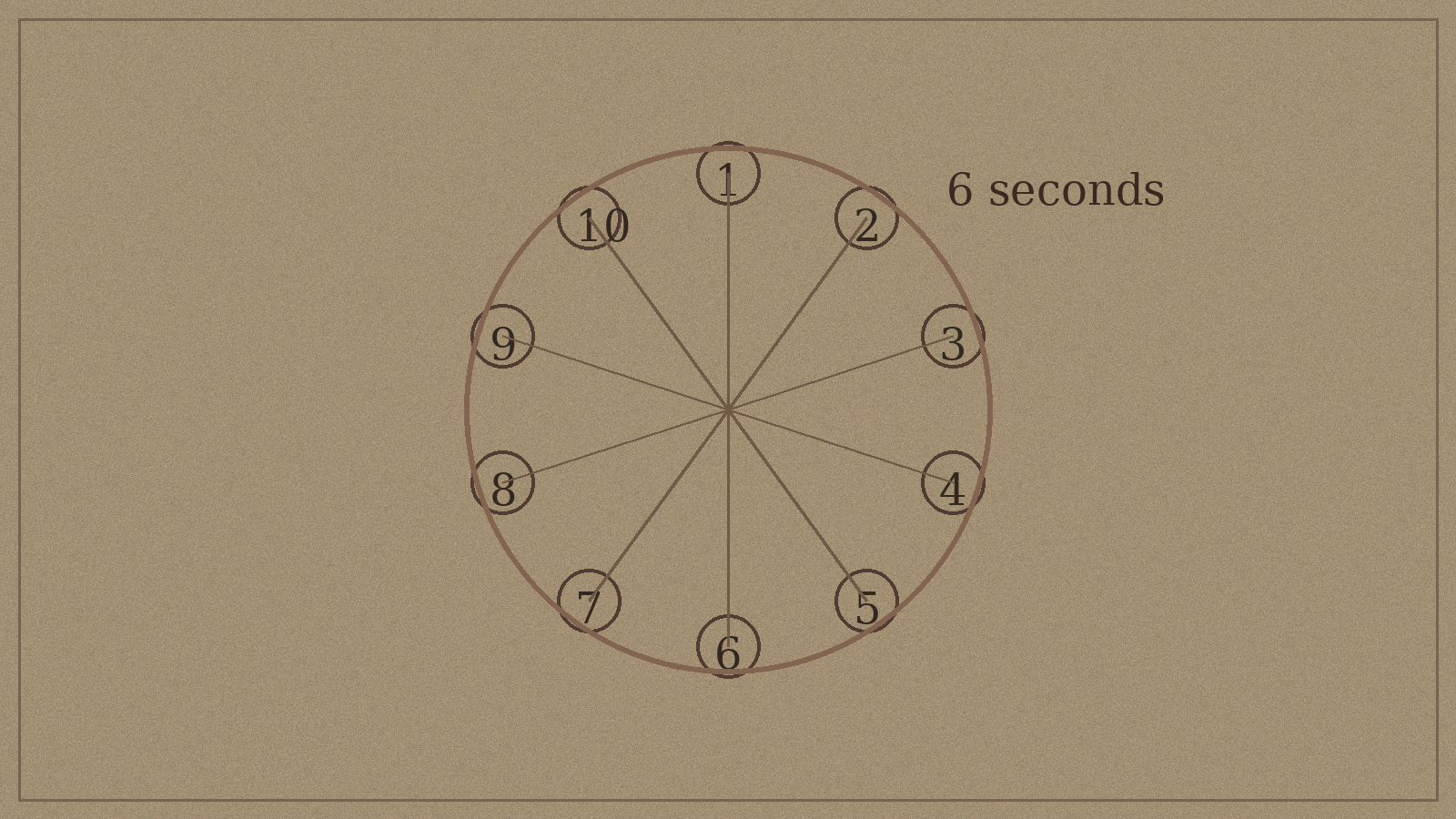
The Attack: Three Reckoning Guards enter the Archive from the front while a Reckoning Fanatic comes through an upper window. The Reckoning Captain enters last, gives Theron exactly three seconds to hand over the text, and then acts.
What makes this combat difficult: - The Archive is narrow aisles and tall shelving. Movement costs extra (treat rows as difficult terrain). - The texts are flammable. If the Reckoning is losing, the Captain orders one guard to start burning shelves as a distraction. Players must choose between pursuing the Raiders and saving the documents. - Theron will panic and hide rather than help. If the players don’t tell him where to go, he runs toward the fight instinctively (wrong direction).
23.8.1 Combat: Secondary Objectives
Winning the initiative roll isn’t the point. What matters is what survives the raid.
| Objective | Condition | Reward |
|---|---|---|
| Protect the ritual text | No folio leaves the room and any fire is extinguished within 2 rounds of ignition | All Session 3 clues stay available; players gain advantage on the next Archive-based Investigation check |
| Evacuate Theron | Spend an action to direct/escort him to the secured reading alcove; no attack hits him | Theron’s trust increases immediately; he shares one extra piece of information at the end of the scene |
| Capture a Reckoning operative | Reduce the Captain or at least one guard to 0 HP non-lethally (or restrain via magic) and succeed on a DC 14 Intimidation/Persuasion check after the fight | Intelligence on the Reckoning’s next target (useful foreshadowing for Sessions 3-4) |
Failing an objective is a Living World consequence: missing pages raise the DC of Isolde’s work; Theron taking damage delays his confession; no prisoners means guessing at the Reckoning’s agenda later.
23.8.2 The Encounter Beat: The Stacks Ignite
At the start of the round immediately after two Reckoning operatives drop (guards or fanatic), Captain Marsh snaps: “Burn it.” One guard topples a lantern into the nearest shelf. The moment the flame hits:
- A 10-foot section of shelving becomes difficult terrain and emits heavy smoke; creatures entering or starting their turn there make a DC 13 Constitution save or gain disadvantage on attack rolls until the start of their next turn.
- Anyone adjacent when the fire ignites must succeed on a DC 13 Dexterity save or take 6 (2d6) fire damage and drop whatever they’re holding.
- Each round the fire remains unchecked, it spreads 5 feet further and destroys one random document bundle (fail the “Protect the ritual text” objective after two bundles burn).
Players can spend an action (or a 1st-level spell slot such as create water) to douse a 5-foot section. Clever solutions (mage hand lantern toss, gust of wind, etc.) apply as normal. The beat is the point where the combat becomes a race; make sure the urgency is felt.
23.8.3 Combat Tactics
Reckoning Guards (3): Work in pairs. One grapples to restrain; the other strikes. They deliberately target the physically weakest player first to create an opening. They do not take prisoners - they are willing to kill, unlike the Restorers.
Reckoning Fanatic: Enters from elevation (upper floor, can drop down). Opens with inflict wounds from surprise if possible. If combat is going badly, uses hold person on the most dangerous character and runs.
Captain Marsh: Uses the environment aggressively - pushing bookshelves into players (DC 13 Dexterity saving throw or 2d6 bludgeoning damage + restrained until freed). Targets Theron as a secondary objective - if the Captain reaches Theron, he grabs him as a hostage.
Retreat Condition: If two Guards fall, Captain Marsh orders a fighting retreat. He will not sacrifice himself for a failed raid. On retreat, if he can grab even one page of the ritual text, he will.
GM Tip: The burning of the Archive is the moral weight of this combat. The players may “win” the fight and still lose key documents. The Reckoning knows this and uses it. If session 3’s Path 3 (Isolde’s method) becomes relevant, the loss of specific pages can make Isolde’s verification harder.
23.9 Scene 2: The Branching Point - What Do You Do With This?
The players now know something no one else (outside Theron and presumably Edoran) knows.
The central question: Do you tell the Dawnborn?
There is no mechanic for this. It is simply a question. Ask it at the table.
23.9.1 Path A: They Tell the Dawnborn
Go to Scene 3A.
23.9.2 Path B: They Don’t Tell Them Yet
Go to Scene 3B.
23.9.3 Path C: They Go to the Chancellor First
She will want to proceed with the ritual. She will be practical about it. She will say: “We don’t have to tell them immediately. Find out if there’s another way first.” She is not wrong. Go to Scene 3B, but with the Chancellor’s pragmatism as company.
23.9.4 Path D: They Go to Edoran
This is the first real meeting with Brother Edoran if they haven’t had it. He already knows. He says so calmly. He is not triumphant - he is tired.
“I’ve known for seven years. I found Corven’s assistant’s notes in a private estate sale. I have been waiting for someone official to find it, because I knew what would happen when I said it myself: nobody would listen to a cultist.” (A pause.) “Are you listening now?”
He will propose cooperation. He knows the Dawnborn personally - several are people he cares about. He believes the ritual is the only answer. He will ask the players to help him find the willing ones and protect them from the unwilling ones. He does not think the unwilling ones should be forced.
23.10 Scene 3A: Telling the Dawnborn
Location: The Dawnhalls, or wherever the players can gather the featured Dawnborn.
Present Sera, Tomas, and Lira (or whichever Dawnborn the players are most connected to).
23.10.1 How the Three Respond
Sera - pauses, then accepts it. Asks if it’s verified. When told yes, she is very quiet, then: “Alright. What are the actual options?”
Tomas - asks three precise clarifying questions. Confirms he had suspected. Says he needs time. Is not angry.
Lira - goes cold. “No.” Looks around the room. “Find another way.” Walks out. She is not finished with this conversation - but she is finished with it right now.
23.10.2 The Moral Weight of This Scene
The players told these people they might need to die for the city to live. How the Dawnborn receive that news is a direct reflection of who the players are being in this scene.
| Approach | Dawnborn Response |
|---|---|
| Clinical and informational | Tomas respects it; Sera is okay; Lira is colder |
| Apologetic and uncertain | Creates more distress; they end up comforting the players |
| Direct but humanizing | Best response; they feel treated as adults |
| Incomplete or hedged | They sense it; press for full truth; trust drops when they find out later |
GM Tip: Let this scene be awkward. Real conversations about death are awkward. Don’t let players or NPCs give polished speeches. Someone should pause. Someone should say the wrong thing first. That’s where the drama is.
23.11 Scene 3B: Not Telling the Dawnborn
This path is equally valid. The players have chosen - consciously or through delay - to carry this information themselves for now.
What this decision does: - Creates dramatic irony: every subsequent interaction with a Dawnborn is loaded - Establishes the players as decision-makers about other people’s fates - Buys time to explore alternatives (Session 3’s focus)
But the world doesn’t wait:
Within this session, even if the players delay, Tomas Areth meets them by coincidence and asks, carefully:
“You’ve been to see Theron. I know his handwriting on your papers. I’ve been waiting for someone to finally ask the right questions.” (He pauses.) “May I ask what you found?”
This is his tell that he already suspects. If the players deflect, he doesn’t push - but:
“When you’re ready to talk, I’ll be ready to listen. I’ve had a long time to prepare for this conversation.”
Whether they tell him or not, he knows something changed today.
23.12 Scene 4: Edoran’s Perspective (If Not Yet Encountered)
If the players haven’t met Brother Edoran yet, he appears at the end of Session 2. He is waiting outside the Dawnhalls, or the Archive, or wherever the players are.
“You know now,” he says simply. “I can tell by how you’re walking.”
He will offer context, empathy for the Dawnborn as individuals, and his position: that the ritual must be completed, that he hopes it can be done with consent, and that he has already approached the ones he thinks might be willing. He does not name them.
23.13 Closing Beat: The Weight Settles
End the session without resolution. This is intentional.
23.13.1 Read-Aloud
Outside, the amber light has done what it always does - neither brightened nor dimmed. In the market square, someone is playing a hand drum, the same three-beat rhythm over and over. Children are chasing each other around a fountain.
You know something now that those children don’t know. You know something that the people in that market don’t know. You know something that most of the Dawnborn - probably - don’t know yet.
The question isn’t whether you know. The question is what you do with knowing.
The drum keeps playing.
23.13.2 Post-Session Question
Ask the players directly: “If you found out today that ten specific people had to die so that millions could live better lives - do you have the right to make that decision? Does anyone?”
23.14 Stat Blocks
23.14.1 Tomas Areth, Dawnborn Mediator
Medium humanoid (human), lawful neutral
AC 12 (studded leather) | HP 39 (6d8+12) | Speed 30 ft.
| STR | DEX | CON | INT | WIS | CHA |
|---|---|---|---|---|---|
| 12 (+1) | 14 (+2) | 14 (+2) | 17 (+3) | 18 (+4) | 14 (+2) |
Saving Throws Int +5, Wis +6 Skills History +5, Insight +8, Investigation +5, Persuasion +4 Senses passive Perception 14 | Languages Common, Elvish | CR 2 (450 XP)
Traits - Lux Anchor (Passive). Cannot be reduced below 1 HP more than once per long rest. - Patient Read. Tomas has advantage on Wisdom (Insight) checks. He cannot be surprised in social situations. - Long Memory. Tomas remembers everything relevant said in his presence. He can recall exact wording of conversations with a DC 10 Intelligence check.
Actions - Multiattack. Tomas makes two attacks. - Short Sword. Melee Weapon Attack: +4 to hit, reach 5 ft., one target. Hit: 5 (1d6+2) piercing damage. - Mediate (Recharge 5-6). Tomas interposes himself in a conflict. All hostile creatures within 30 feet that can see him must succeed on a DC 16 Wisdom saving throw or be unable to take hostile actions against Tomas or his allies for 1 round. Creatures that succeed are immune for 24 hours.
Tactics: Tomas does not initiate combat. If forced to fight, he fights defensively and tries to end the confrontation through words. He uses Mediate when he or an ally is threatened. He targets the least aggressive combatant on the enemy side and attempts to reason with them mid-fight.
23.14.2 Lira Anwick, Dawnborn Healer
Medium humanoid (human), neutral good
AC 13 (healer’s pack, dexterity) | HP 44 (8d8+8) | Speed 30 ft.
| STR | DEX | CON | INT | WIS | CHA |
|---|---|---|---|---|---|
| 10 (+0) | 14 (+2) | 12 (+1) | 15 (+2) | 18 (+4) | 14 (+2) |
Saving Throws Wis +6, Cha +4 Skills Insight +6, Medicine +8, Nature +4, Perception +6 Senses passive Perception 16 | Languages Common | CR 2 (450 XP)
Spellcasting. Lira is an 8th-level spellcaster (Wis, DC 14, +6 to hit): - Cantrips: guidance, resistance, spare the dying - 1st level (4 slots): cure wounds, healing word, bless - 2nd level (3 slots): lesser restoration, prayer of healing - 3rd level (2 slots): mass healing word, remove curse - 4th level (2 slots): death ward, guardian of faith
Traits - Lux Anchor (Passive). Cannot be reduced below 1 HP more than once per long rest. When Lira reaches 1 HP this way, creatures within 10 feet regain 5 HP. - The Living Reason. Lira has a daughter (Mira, age 3). The knowledge of her daughter’s existence gives Lira advantage on saving throws against effects that would magically compel her to act against her family’s interests.
Actions - Healer’s Strike. Melee Weapon Attack: +4 to hit, reach 5 ft., one target. Hit: 4 (1d4+2) bludgeoning damage, and the target must succeed on a DC 14 Constitution saving throw or be stunned until the end of its next turn (a sharp nerve strike, not magic). - Spellcasting. Lira casts a spell from her list.
Reactions - Emergency Ward. When a creature within 30 feet drops to 0 HP, Lira can expend a spell slot as a reaction to cast healing word on them.
Tactics: Lira does not fight offensively unless her daughter is threatened. In any confrontation, she positions to protect the most vulnerable person present. If she must fight, she uses healing to stabilize allies while using her Healer’s Strike to create openings for escape.
23.14.3 Brother Edoran, Restorer Theologian
Medium humanoid (human), lawful neutral
AC 13 (leather armor) | HP 33 (6d8+6) | Speed 30 ft.
| STR | DEX | CON | INT | WIS | CHA |
|---|---|---|---|---|---|
| 11 (+0) | 14 (+2) | 12 (+1) | 14 (+2) | 16 (+3) | 16 (+3) |
Saving Throws Wis +5, Cha +5 Skills Insight +5, Persuasion +7, Religion +6 Senses passive Perception 13 | Languages Common, Celestial | CR 2 (450 XP)
Spellcasting. Edoran is a 5th-level spellcaster (Wis, DC 13, +5 to hit): - Cantrips: guidance, sacred flame, thaumaturgy - 1st level (4 slots): bless, healing word, sanctuary - 2nd level (3 slots): calm emotions, hold person - 3rd level (2 slots): beacon of hope, mass healing word
Traits - The Grieving Father. Edoran’s daughter died of grey sickness seven years ago. He cannot be magically charmed, and he has disadvantage on saving throws against effects that appeal to parental love or grief (he knows the manipulation, but it still works). - Consent Above All. Edoran will not willingly take an action that harms an unwilling Dawnborn. If compelled to do so by magic, he can make a DC 18 Wisdom saving throw to resist.
Actions - Multiattack. Edoran makes two attacks. - Staff. Melee Weapon Attack: +4 to hit, reach 5 ft., one target. Hit: 4 (1d6+1) bludgeoning damage. - Spellcasting. Edoran casts a spell from his list.
Tactics: Edoran is not a fighter. He uses calm emotions first in any conflict and sanctuary on himself if physically threatened. His goal in any confrontation is to talk. He will only use hold person as a last resort to prevent violence against the Dawnborn.
23.14.4 Reckoning Guard
Medium humanoid (human), lawful evil
AC 14 (chain shirt) | HP 16 (3d8+3) | Speed 30 ft.
| STR | DEX | CON | INT | WIS | CHA |
|---|---|---|---|---|---|
| 14 (+2) | 13 (+1) | 12 (+1) | 10 (+0) | 10 (+0) | 9 (-1) |
Skills Athletics +4, Intimidation +1 | Senses passive Perception 10 | Languages Common | CR 1/2 (100 XP)
Actions - Multiattack. The Guard makes two attacks. - Short Sword. Melee Weapon Attack: +4 to hit, reach 5 ft., one target. Hit: 5 (1d6+2) piercing damage. - Heavy Crossbow. Ranged Weapon Attack: +3 to hit, range 100/400 ft., one target. Hit: 6 (1d10+1) piercing damage. - Shove Shelving (Archive only). The Guard shoves a bookcase. One creature within 5 feet of the case must succeed on a DC 13 Dexterity saving throw or take 7 (2d6) bludgeoning damage and be restrained until freed (Athletics DC 13).
23.14.5 Reckoning Fanatic
Medium humanoid (human), lawful evil
AC 13 (leather armor) | HP 27 (5d8+5) | Speed 30 ft.
| STR | DEX | CON | INT | WIS | CHA |
|---|---|---|---|---|---|
| 10 (+0) | 14 (+2) | 12 (+1) | 12 (+1) | 14 (+2) | 11 (+0) |
Saving Throws Wis +4 | Skills Deception +2, Religion +3 | CR 1 (200 XP)
Spellcasting. Wis-based, DC 12, +4 to hit. Cantrips: sacred flame. 1st level (2 slots): inflict wounds, hold person.
Actions - Multiattack. Two attacks. - Dagger. Melee or Ranged Weapon Attack: +4 to hit, Hit: 4 (1d4+2) piercing. - Inflict Wounds (1st level slot). Melee Spell Attack: +4 to hit, reach 5 ft. Hit: 10 (3d6) necrotic.
23.14.6 Captain Marsh, Reckoning Commander
Medium humanoid (human), lawful evil
AC 16 (chain mail) | HP 52 (8d8+16) | Speed 30 ft.
| STR | DEX | CON | INT | WIS | CHA |
|---|---|---|---|---|---|
| 16 (+3) | 14 (+2) | 14 (+2) | 13 (+1) | 12 (+1) | 12 (+1) |
Saving Throws Str +5, Con +4 Skills Athletics +5, Intimidation +3, Perception +3 Senses passive Perception 13 | Languages Common | CR 3 (700 XP)
Traits - Tactical Commander. While Captain Marsh is conscious, Reckoning Guards within 30 feet have advantage on attack rolls against creatures that are within 5 feet of an ally. - Ruthless Pragmatist. When Marsh takes the Attack action, he can replace one attack with an attempt to push a creature 10 feet (contested Athletics check).
Actions - Multiattack. Captain Marsh makes three attacks. - Longsword. Melee Weapon Attack: +5 to hit, reach 5 ft., one target. Hit: 7 (1d8+3) slashing damage, or 8 (1d10+3) two-handed. - Hostage Grab. Captain Marsh grabs a Medium or smaller creature. The target must succeed on a DC 13 Strength (Athletics) or Dexterity (Acrobatics) check or be grappled. While grappled this way, the creature is used as a shield: attacks against Marsh have a 50% chance to hit the hostage instead (DM determines randomly).
Reactions - Opportunist. When a creature within 5 feet falls prone, Marsh can make a longsword attack against them.
Tactics: Marsh sets his guards before he enters. He immediately identifies the highest-threat player and orders a guard to engage them, keeping Marsh’s attention free. He goes for Theron as a secondary objective. If the ritual text is secured (or destroyed), he retreats regardless of HP. He will not die for a failed mission.
23.15 Session 2 Consequence Tracking
| Outcome | Note |
|---|---|
| Did they tell the Dawnborn? | Yes = they enter Session 3 as informed agents; No = pressure mounts |
| Ritual Diagram: what tiers did they find? | Note - Tier 3 (cancel mechanism) is critical for Session 4 |
| Did they read Theron’s journal? | Note - affects trust with Theron |
| Reckoning raid outcome | Documents stolen/burned? Marsh captured, killed, escaped? |
| Did they meet Edoran? | Note his current relationship with the party |
| How did Lira respond? | Record her exact posture for Session 3 |
| Did Tomas reveal he suspected? | Yes = he becomes a key Session 3 ally |
| Did any player express certainty that the ritual should proceed? | Note - shapes NPC trust in Session 3 |
23.16 GM Notes: Why This Session Works
The weight of this session is not the information. Information is easy. The weight is the choice: who decides?
The players now know something the Dawnborn don’t. That knowledge is power. The decision of what to do with it is a microcosm of the central dilemma.
The Reckoning raid serves the theme: it shows what happens when someone decides they already know the answer and acts unilaterally. The Reckoning is the players’ worst possible future - people who stopped asking questions and started forcing conclusions.
The puzzle rewards careful players with foreshadowing. The riddle rewards emotional intelligence with understanding of Theron. Neither is required to proceed, but both deepen the stakes.
Session 3 is about alternatives. But Session 2 is about whether alternatives are even the players’ right to pursue.